Creative Burnout: Rediscovering Your Purpose As An Artist
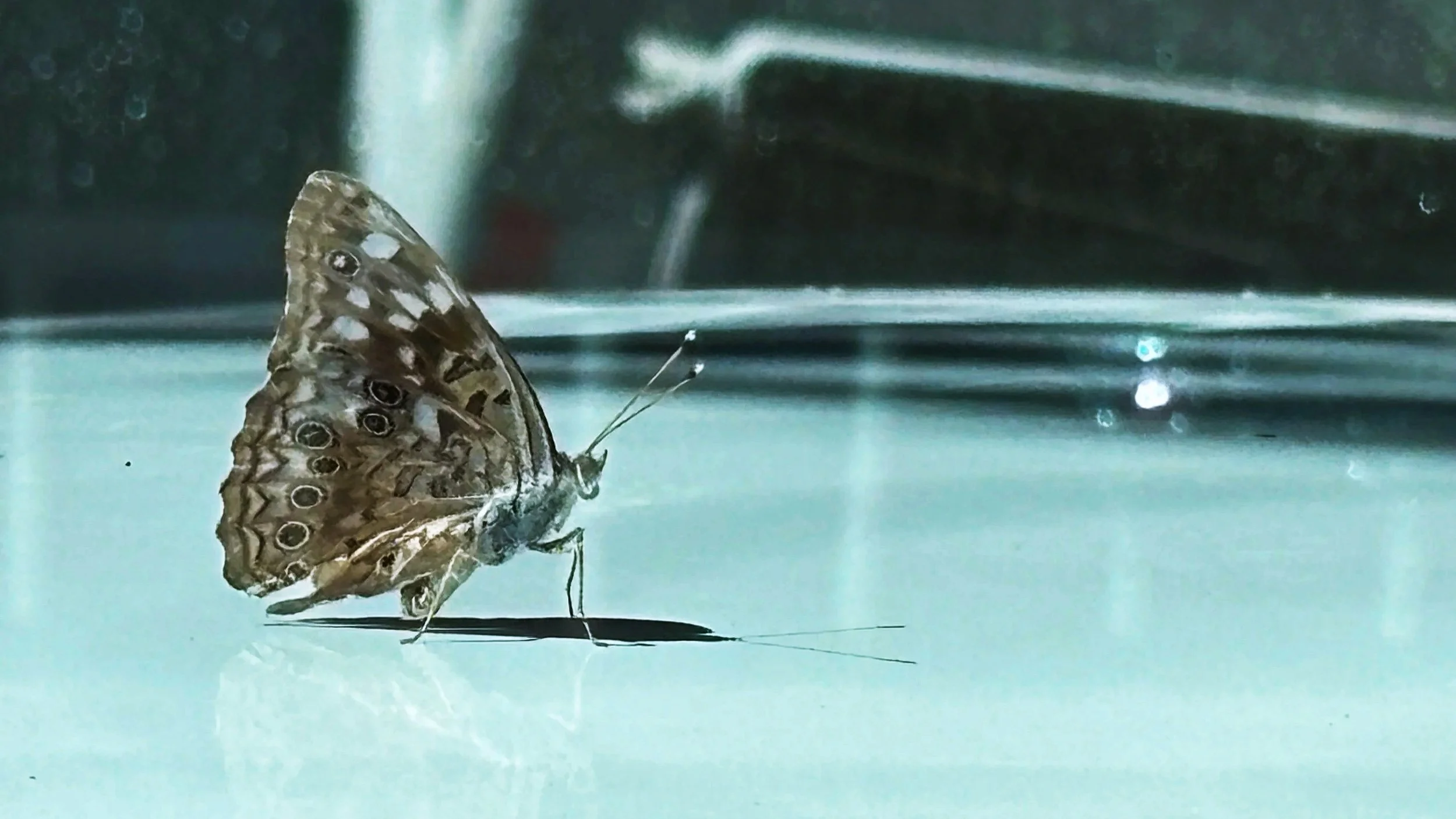
Took this screenshot from a video of a butterfly that landed on my car hood. Snapped it through the windshield.
What is “creative burnout?”
For me, it felt like a complete lack of drive, passion, any sort of motivation to do anything creative. My first experience with creative burnout started as a professional dancer—a hip-hop teacher for kids and adults. I was also working as a wedding and event photographer earlier on in my career. As fun as all this may sound, there came a time when I felt deeply frustrated with my endeavors.
I didn't feel artistically fulfilled with what I was creating or the services I was providing. My work felt disconnected from my vision as a photographer and as a choreographer. This wasn’t enough to keep me from doing my job, but it slowly starved out my creative hunger. Whenever it was time to work, I felt tired, exhausted, and eventually burned out. While most people would simply get over it and continue down this path regardless, my tolerance for it was different. The energy I put into my craft felt incomplete, partially because of my own expectations.
Growing up, my father tried to instill his values about greatness into me. He always told me, “whatever you do, be the best.” Not “do your best,” but “be the best [objectively].” I would tell myself, “okay, sure man. I don't really know how to do that, but I'll try.” I understand his point was to do everything you can to improve as a person, but ultimately, I would obsess over the results of my effort, not the process of improvement. I developed a sense of perfectionism. Pursuing a craft, learning something new, or working for a client were all mentally demanding because of this mindset.
Comparison is the thief of joy and the source of insecurities.
Your “level 4” compared to someone's “level 40” is not a fair comparison to make; all that will do is ruin your self-confidence. “You're not that guy pal.” And it’s okay not to be that guy, but why compare yourself at all in the first place? Especially to people that have more resources, more experiences, more whatever you don’t have. These unhealthy habits led me to drop everything for years. This was my “burnout era.” From 2019 until 2024, I didn't want to have anything to do with creative work. Coincidentally, the global pandemic happened during this time, so there wasn’t much of a choice at first.
Luckily though, I didn't quit entirely thanks to my friends; they would invite me out to do certain things like take a dance class or take photos together. I started to realize part of why I lost my motivation. Why I was interested in creative activities in the first place? When I was a kid, I learned how to dance from YouTube videos, competitive dance tv shows like America’s Best Dance Crew, and dance films like Step Up and You Got Served. I would see people dance and thought to myself, “I want to do that! How do I do that?” And I just started copying what I saw. I copied performers like Omarion and Usher. I had role models to look up to and entertainment that inspired me.
Inspiration is the driving force for your creative mind.
The power of seeing someone do something cool and wanting to do it too is such a slept on aspect of art. This is a part of the formula that we have to maintain as an artist. When I lost this, I lost my motivation. Another reason was because of my mindset. High expectation and believing that I needed to overperform on every project. Inauthentic behavior is never really rewarded anyway, so you’re working twice as hard for not reason. Maintaining a fake persona and creating things that didn't really resonate with me at all is exhausting. Just because a client is paying you doesn’t mean you have to overwork yourself.
Perhaps you've felt that lack of motivation or a disconnect between your vision and your output. You may have set impossibly high standards for yourself, comparing your work to others who are further along in their journey. These unrealistic expectations can lead to the same burnout I described. Remember that your creative path is unique, and the first step toward recovery is recognizing these patterns in yourself. What expectations have you set that might be hindering rather than helping your growth? How often do you find yourself making unfair comparisons with others? Identifying these thought patterns is crucial for your creative wellbeing.
Checking in with yourself will help you recalibrate your creative mind. If your internal drivers to create something are not working properly, you may need to rethink your motivations. We should always have goals, but goals only provide you with a sense of direction. They don’t necessarily drive you forward. A goal is simply a destination or a target you want to hit. You can use GPS, but you still need to push the gas peddle. Using goals as a driving force is a double-edged sword because when you don’t hit that target, how does that make you feel? Maybe a little disappointed or a feeling of doubt in your capabilities. Goals are arbitrary tools for finding direction in life, not the catalyst for progress. We need something sustainable that pushes us to create and improve ourselves regardless of the weather, the time of day, or the mood we’re in.
Purpose is unshakable.
I believe that something is purpose. Without a purpose, you can't maintain motivation to move forward. Think of purpose as the reason “why” you do something instead of “what” you want to accomplish. It’s the gas in your tank and the peddle you can push the make yourself “go.” If you don't know why you want to go somewhere, you won't try to get there. You won't really want to do anything. Purpose is the bedrock for a sustainable mindset, not hunger or hustle. Knowing your reason why will allow you to work for as long as you can and maintain that passion, joy, and excitement as you work.
No matter the scenario or the amount of resources you have, purpose will push you forward regardless. I'll talk more about how to develop your purpose in later posts, but for now, I think reflecting on creative burnout can give enough clues or hints to develop a purpose that will sustain you. If you realize why you get burnt out in the first place, you can use this realization to change your mindset. Things like high expectations, being performative instead of being honest, failing to stay inspired, drawing comparisons between yourself and others, these will only keep you feeling stuck and exhausted. Avoiding these traps would help you get a better sense of what keeps you creatively engaged. Ideally, you’ll figure out something that could keep you going forever or until you’re both financially stable and creatively satisfied.
For me, practicing gratitude was a great place to start in finding my purpose. It keeps me grounded, dedicated, and focused; acknowledging the fact that some people want to create something and can’t for many reasons. This is why when I’m asked to contribute to a project, I try do whatever I can regardless of the outcome. When it comes to finding your purpose, make it something personal. It only needs to work for you. Also, don’t waste your time trying to justify it to others. You don't need to explain why you make what you make. Keep it between you and your creative spirit. Understanding why you want to create is what matters; nobody else has to understand.
Thanks for reading.